X No. 15894 words
If you aren't using models with different effort levels, you're probably wasting tokens, and time
Spend the last few days with Fable 5 seems to have rewired my brain a bit, and it’s making me think a lot more about effort level, and the tradeoffs between effort, thinking, and performance. My realization is that I have been spending more tokens, and more time, using efforts levels that go beyond what is needed to produce a good solution, not all the time, but definitely a meaningful amount of time.
This idea first came to me when I saw this benchmark, it shows that Fable, when used at low effort, scores higher on agentic coding tasks that Opus 4.8 and GPT 5.5 both on high effort. And Fable on medium effort beat Opus 4.8 on xhigh and max, and GPT 5.5 on high and xhigh.
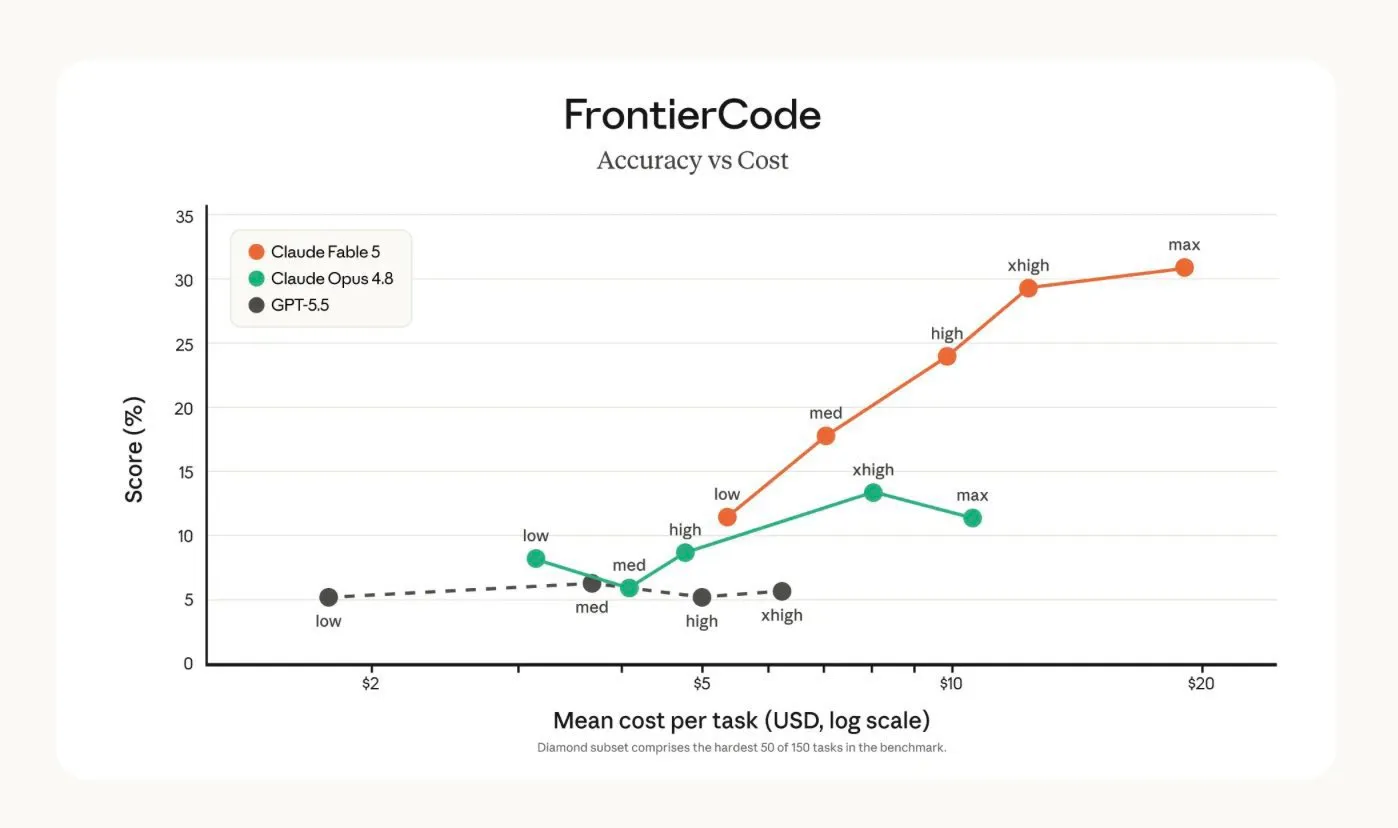
This made me think, what if I just did a bunch of my normal coding tasks, using Fable, but with low effort. For some reason, and I think I’m not alone here, I’m wired to think, when I use a model, for coding, I need to use it on high or xhigh effort. But why do I think that?
So I tried Fable on low effort, for a bunch of normal tasks, for hours, and tried a range of things, from small updates in medium-sized codebases, to bigger, more complex updates in larger codebases, and it kinda blew my mind, the results were shockingly good. Not perfect in all cases, but fast, and honestly perfect in many of the tests I ran.
It was a bit of a Eureka moment, and I got excited and wrote this post on X, which ended up going viral, which I really wasn’t expecting.
My biggest takeaway from my first day with Fable 🔽
Low effort is the alpha.
Incredibly smart, and cheaper than Opus, what’s your rush? It’s a great model.
Looking at the comments, I saw a lot of people were confused about model effort level. A number of people commented about not wanting to use low because they were afraid it would be too slow.
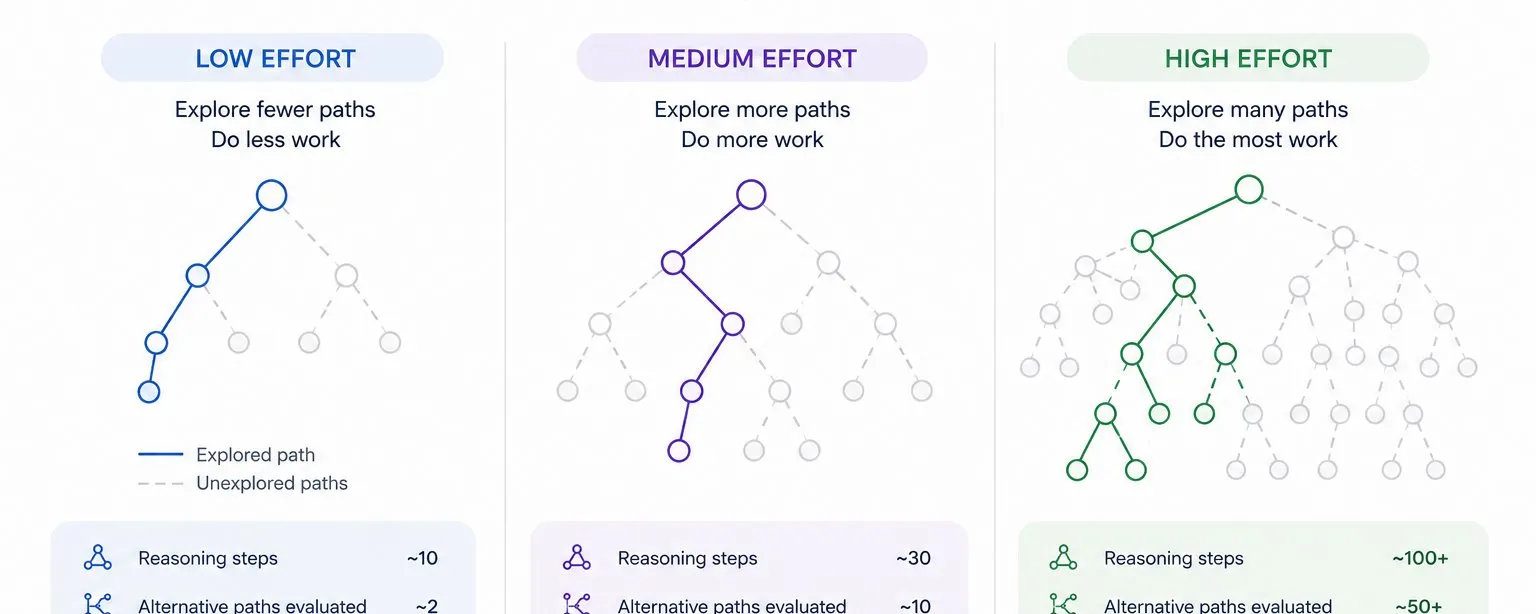
Just look at the image above, low is the fastest mode you can use…as you dial up effort, the model doesn’t get faster, instead, it spends more compute on reasoning, explores more solution paths, and sometimes uses tools more often to help it get to a better solution.
But the thing is, for so many routine coding tasks, you actually don’t need more time spent on compute, or more tool calls, all this will do is take more time and spend more tokens, and arrive at the same solution.
And that’s what I found with Fable. I could run the exact same task on low, medium, and high, and get the exact same solution. The only difference was, on high, it took a lot longer and used wayyyyyy more tokens.
So then I decided to talk to Fable about this directly, I walked through a plan we put together and asked it, what effort level it thought I needed for each, and then, well it felt like another Eureka moment for me. It came back with an organized table, showing each phase of my project, and what effort level was realistically needed for each.
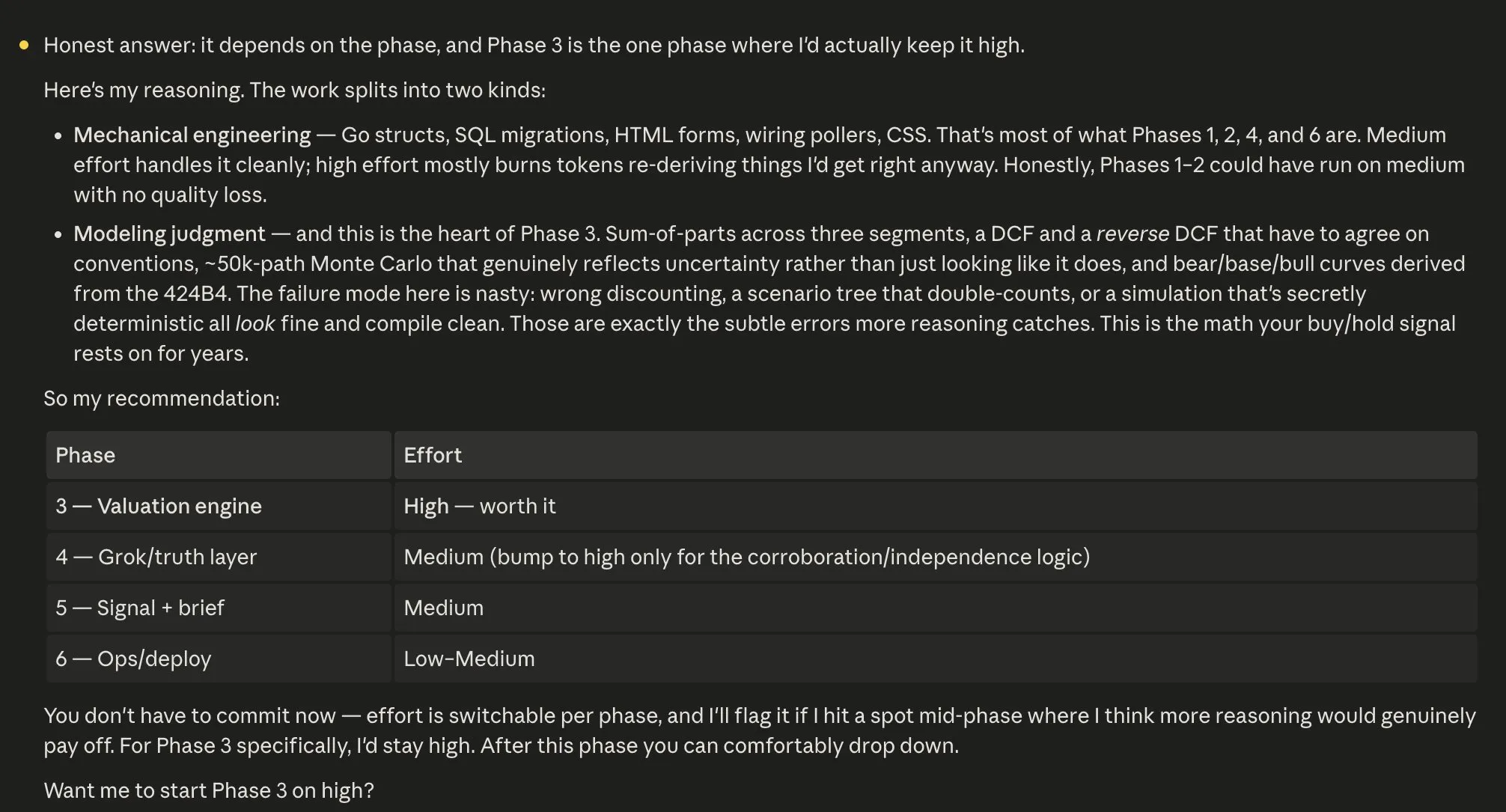
And as you’ll see, for the next four phases of my build, only one phase needed high, the rest, would be fine with medium, and one with low.
It hit me pretty hard here if I’m being honest, how many tokens have I wasted over the last year, running models at effort levels way beyond what was needed? The end result was, me getting the same solution, just slower, and at a higher cost 🫠
Now, yeah, it’s Saturday morning and this is all I can think about. I would test more with Fable, but last night, while I was winding down for the evening, Anthropic posted this, so I guess no Fable for me today.
The US government, citing national security authorities, has issued an export control directive to suspend all access to Fable 5 and Mythos 5 by any foreign national, whether inside or outside the United States, including foreign national Anthropic employees.
The net effect of
That being said, I’ll be honest, I’m a little less bummed than I thought I would be. I fired up both Codex and Claude Code, opened up two different projects, and before having either dive into what I had planned to build with each this weekend, I asked each, “what level of effort do you think is needed for each phase on this plan,” and now, I’m seeing things like this:

More to come, and right now all of this is just me testing in a pretty non-scientific way, which is bugging me a bit because I do want to get more scientific about it. I’m taking a lot of the benchmarking I do, and moving it into my own solution, something I decided to call @vulcanbench - and I think I’ll be able to release it this weekend so other ppl can play with it as well. The idea is an open source benchmarking tool, so everyone can see exactly how each benchmark is done, and they can also fork it and make it their own…and yes, varying effort levels is going to be there from day one.
Okay, well it’s a beautiful day in Tahoe, time for my morning hike! 🥾